
Smart Energy®
Smart Energy Solutions for Energy Companies Operating District Heating Systems
Fourdeg Smart Energy® provides AI-powered tools for energy companies to support the transition from conventional "bulk" heat production toward a more flexible, efficient, and sustainable model.
By combining AI-based control, real-time data, and digital twin visualization, energy companies can optimize production, distribution, and consumption — all while turning connected buildings into virtual thermal storage.
This enables advanced Demand-Side Management, reduces peak loads, and improves the competitiveness of district heating compared to other heating methods.
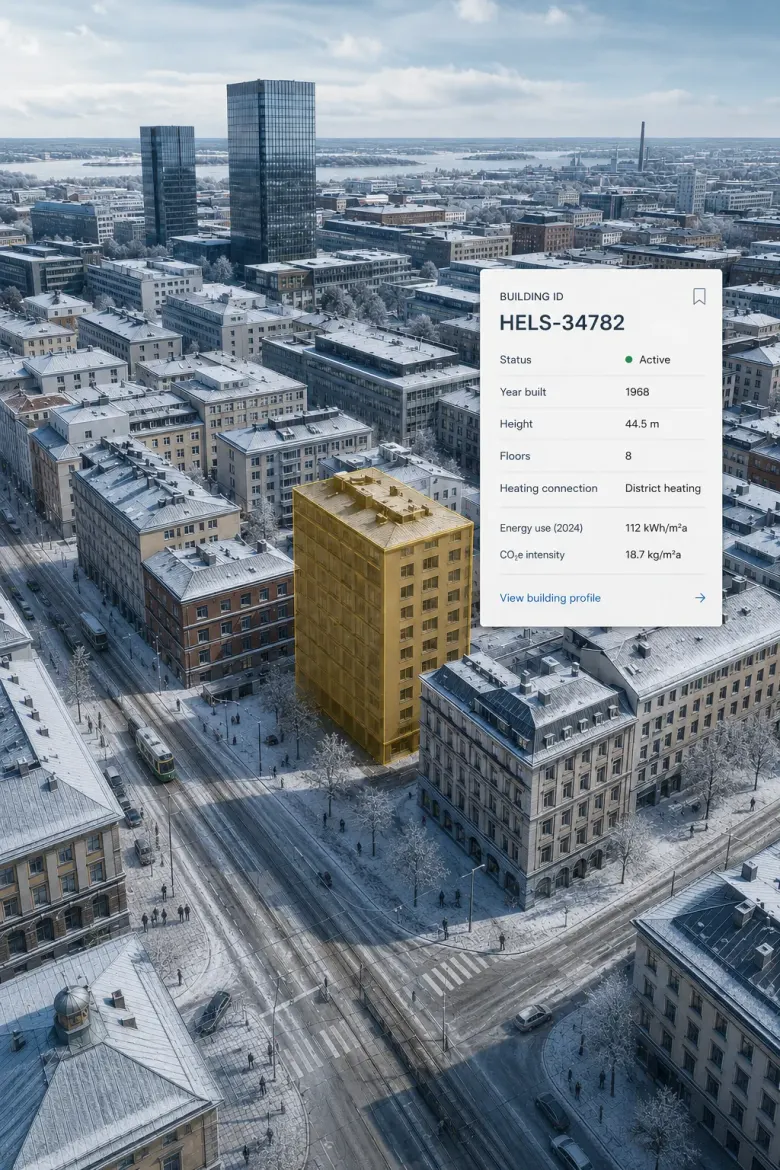
3D Digital Modeling of District Heating (Digital Twin)
Fourdeg's 3D Digital Twin models provide a real-time, virtual replica of district heating networks — helping operators monitor, simulate, and optimize energy flows at both building and network levels.
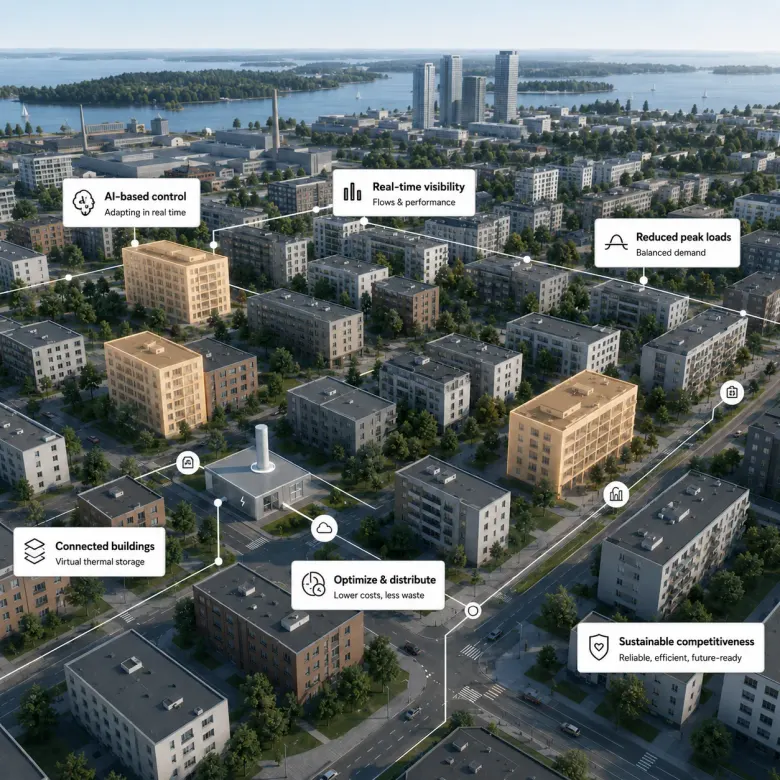
Key Components for Smart District Heating
Core Capabilities for Efficient District Heating Management
Distributed Thermal Storage
Unlock hidden storage potential in every building
Fourdeg turns buildings into virtual thermal batteries, using their structure to store heat and reduce peak load demands.
Our AI-based system manages distributed heat storage capacity across the network — no tanks required.
Forecast-Driven Control
Transitioning from reactive to predictive control
Fourdeg's AI forecasts heating demand using weather data and usage patterns.
This enables better balance across decentralized heat sources — especially important in networks shifting from fossil fuels to renewables.
Production Cost Optimization
Lower costs, higher flexibility
By combining real-time control with Demand Side Response (DSR), Fourdeg reduces peak energy costs, enhances network flexibility, and supports climate targets.
Buildings actively help balance the grid, improving economics and sustainability.
Demand-Side Management
Fourdeg Smart Energy® transforms buildings into distributed thermal storage systems — controllable in near real-time through AI-driven cloud services that factor in local weather forecasts.
This highly flexible setup:
- Stores heat in building structures
- Reduces peak loads and costly fossil backup activation
- Allows utilities to optimize production timing and sources, improving efficiency and reducing emissions
DSM with Fourdeg helps district heating networks become smarter, more stable, and more sustainable.
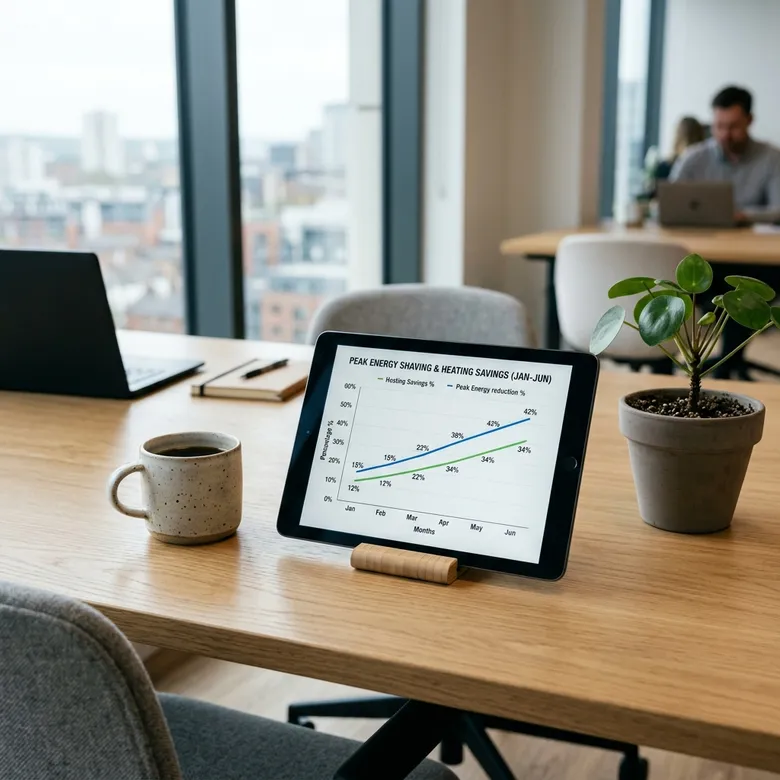

Enabling New Sales, Services & Business Models
Fourdeg Smart Energy® helps energy companies move beyond commodity heat supply by enabling customer-centric, data-driven services. With DSM and individual room-level control, companies can:
- Offer stable indoor temperature as a service, not just megawatts
- Expand beyond traditional territory with cloud-managed solutions
- Build new revenue streams and influence end-user behavior through incentivized demand elasticity
The shift to smart energy opens the door to engaging digital services, customer partnerships, and scalable new value models.
For Property Owners
Fourdeg Smart Heating for Energy Efficiency
AI-powered room-level heating optimization for residential, commercial, and public buildings with water-circulating radiators.
20–35%
Energy Savings
Proven in schools, offices, and residential buildings across multiple climates.
AI
Predictive Control
Weather-aware, self-learning algorithms optimize heating in real time.
24/7
Cloud Monitoring
Full visibility into building heating performance from anywhere.
Frequently Asked Questions
Everything you need to know about smart district heating and AI-powered network optimization.
What is smart district heating?
Smart district heating uses AI, IoT sensors, and cloud computing to automatically optimize how a district heating network produces, distributes, and consumes heat. Instead of running at fixed output regardless of actual demand, smart systems predict load requirements, reduce peak periods, shift consumption to low-cost energy windows, and enable buildings to act as distributed thermal storage. The result is lower production costs, fewer emissions, and a more competitive heating network.
How much can district heating optimization save energy companies?
Energy companies using Fourdeg Smart Energy® have reduced production costs by 15–30% and significantly cut peak load requirements. The main driver is reduced reliance on expensive fossil-fuel peak-load boilers. By pre-heating connected buildings during cheap energy periods, Fourdeg flattens the demand curve without any sacrifice in indoor comfort.
What is demand-side management in district heating?
Demand-side management (DSM) means intelligently controlling when and how much heat connected buildings consume. Fourdeg's AI platform pre-heats buildings during cheap energy periods (using their thermal mass as storage) and reduces consumption during expensive peak hours — without occupants noticing any temperature change. This flattens the demand curve for the utility, lowering production costs.
How does a district heating digital twin work?
A district heating digital twin is a real-time 3D virtual model of the entire network — from heat generation plants to individual connected buildings. Fourdeg's digital twin visualizes live energy flows, identifies network bottlenecks, and models the thermal behavior of each building. Operators can simulate changes before applying them to the live network, making optimization safer and more data-driven.
What is demand-side response (DSR) in district heating?
Demand-side response (DSR) is the ability of the heating network to rapidly adjust building-level consumption in response to price signals, grid conditions, or renewable availability. Fourdeg coordinates smart thermostats across connected buildings to either increase or reduce heat consumption on short notice — turning the building stock into a flexible, distributed thermal battery that actively helps balance the heating grid.